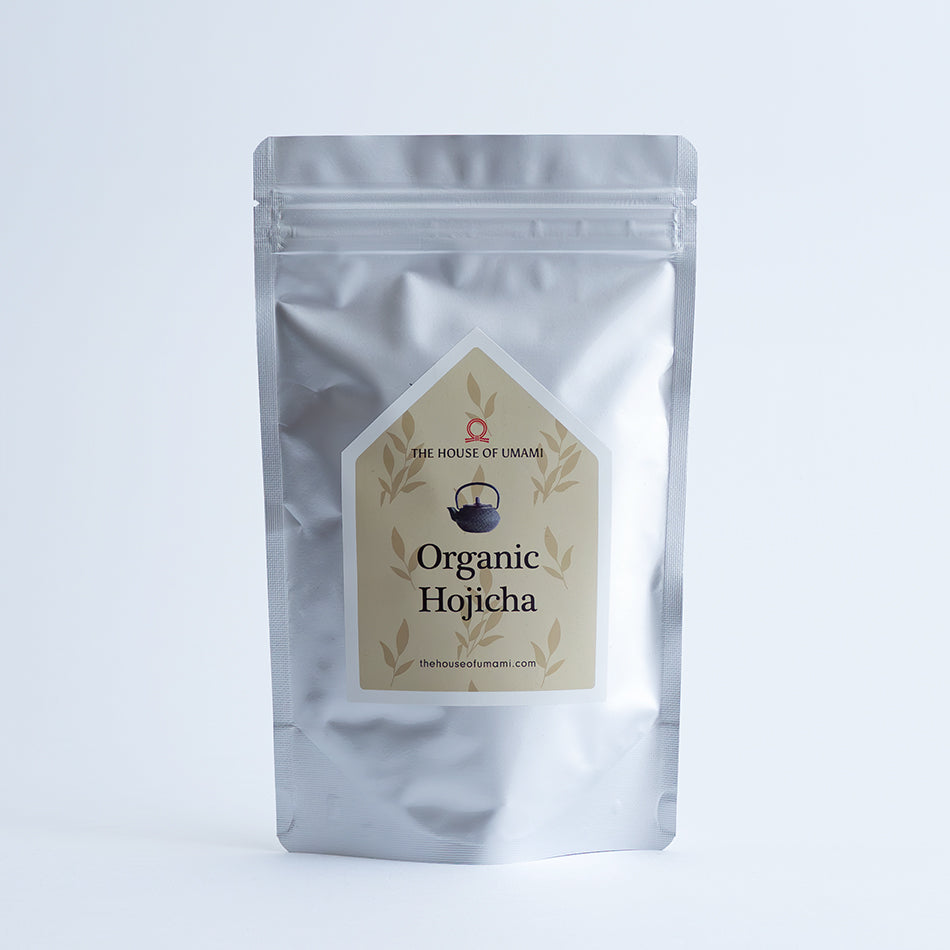
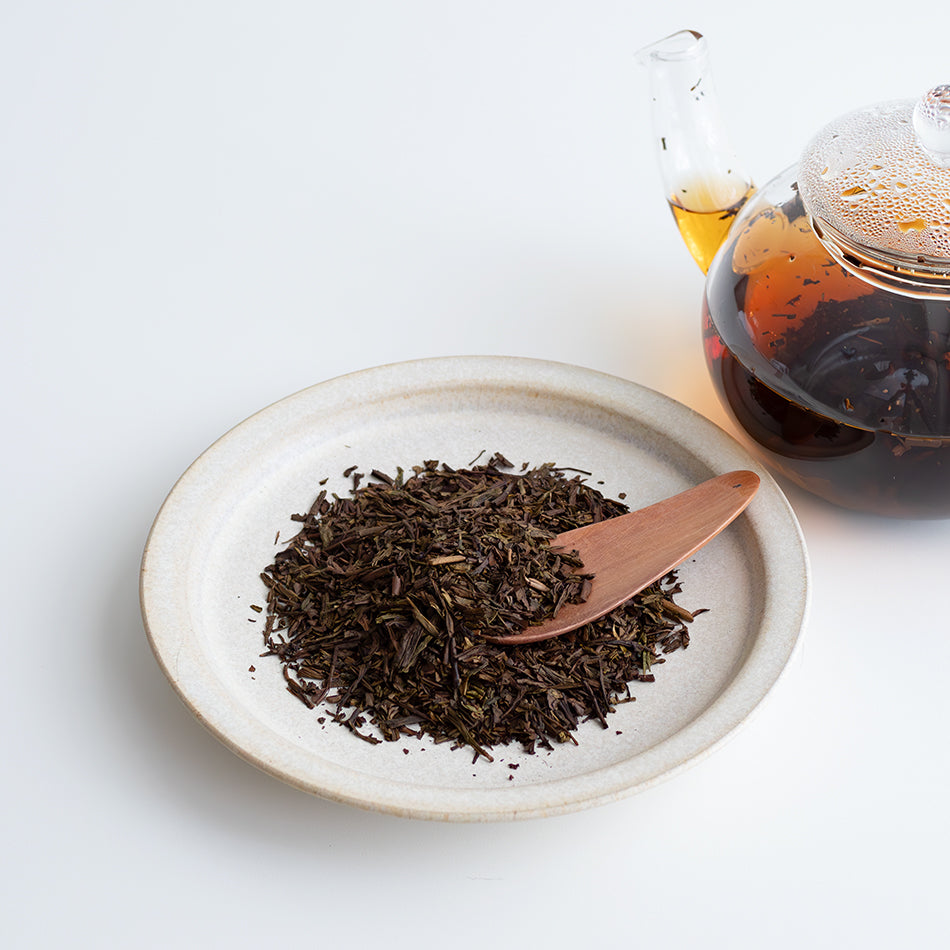
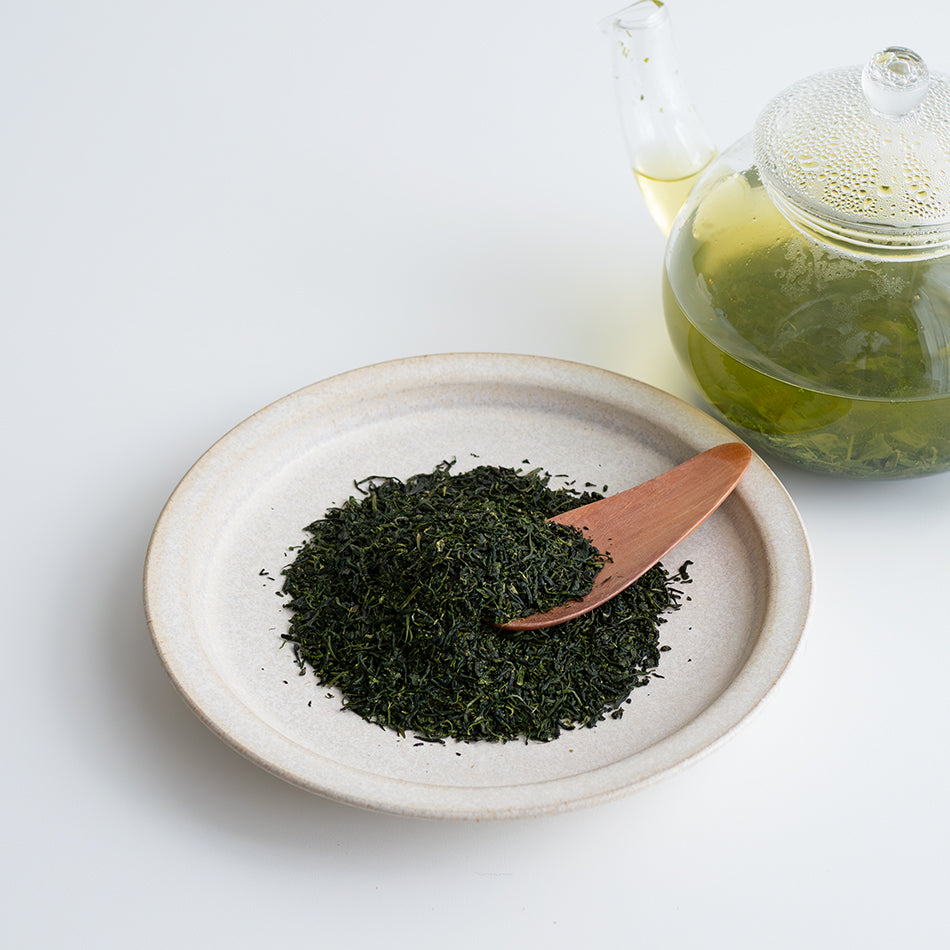
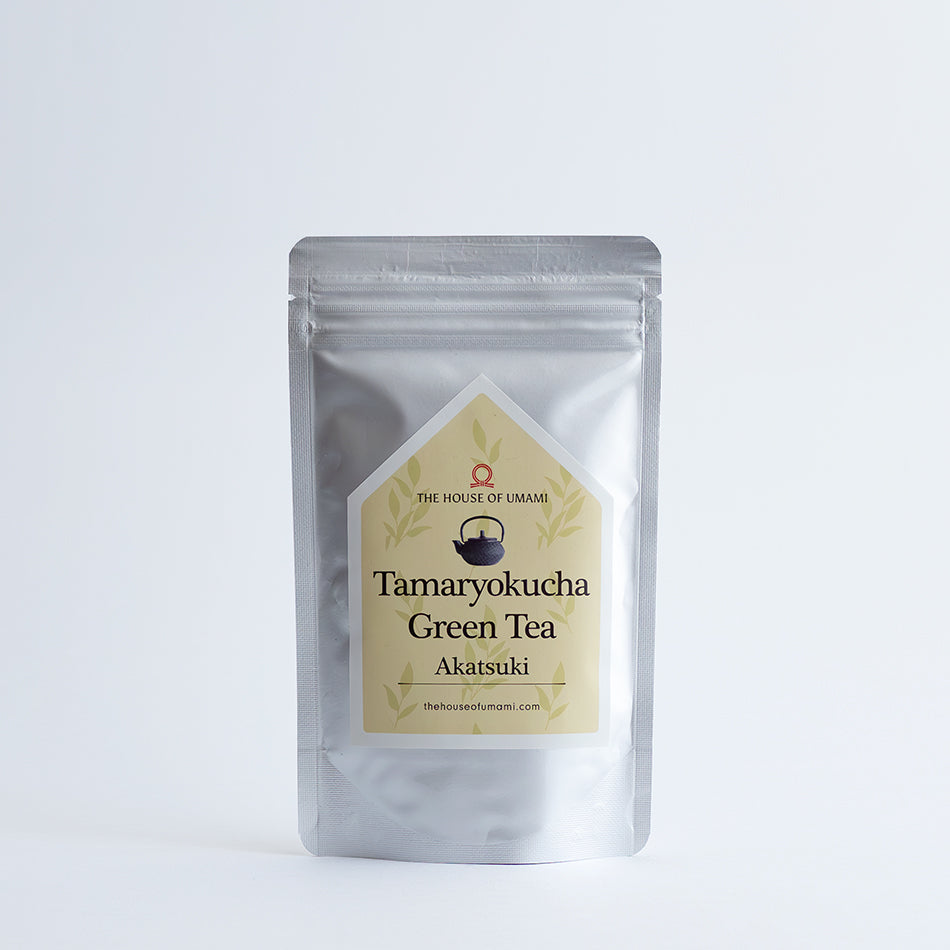
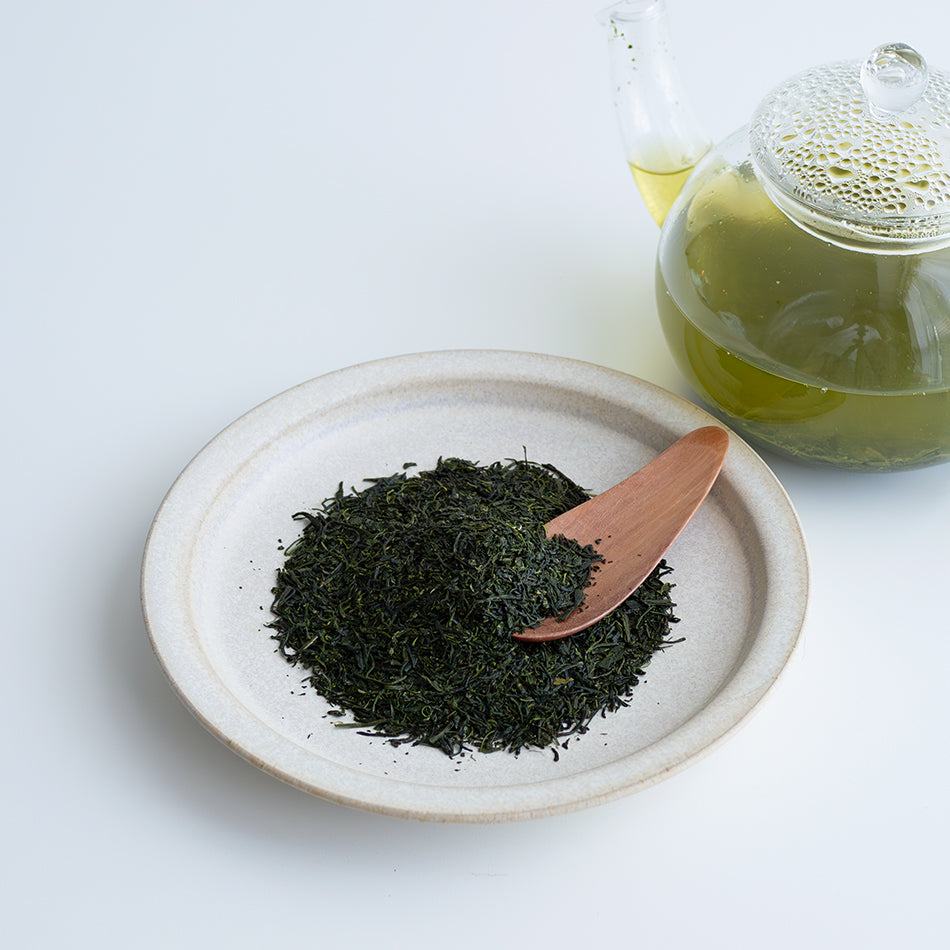
Hojicha roasted from tamaryokucha, not bancha, by a third-generation tea producer in Ureshino, Saga. Nutty, gently sweet, and clean on the finish.
Hojicha is green tea that has been roasted. How far that roast goes, and how it is matched to the leaf in front of you, is where the tea is made or lost. Tokunaga Seicha built its name on that step — reading the character of each lot and adjusting the roast accordingly. The producer has taken prizes at the Japanese Tea Awards in 2015, 2019 and 2022, and two- and one-star Great Taste Awards in the UK in 2017, 2018 and 2019.
The producer sits in Ureshino, in southwest Saga. Tea has been grown in this misty basin since around 1440, and Ureshino accounts for a small share of Japan’s green tea production. Almost all of what the region makes is tamaryokucha — curled rather than needle-shaped, and a rarity among Japanese green teas. Hojicha is usually roasted from bancha or from stems; this one is roasted from tamaryokucha, which gives it a rounder, sweeter character. The tea is made in small lots, in the producer's own facility next to the shop.
Masao Tokunaga started the business in 1947, selling tea by bicycle through Saga and Nagasaki with his wife. His grandson Kazuhisa runs it now. He worked as a systems engineer before coming back to the trade, and spent time in Ireland, where he saw how differently tea is drunk outside Japan. The House of Umami is the producer’s exclusive partner in the United States.
In the cup: toasted grain and caramel, a clean finish, almost no astringency. In Japan, hojicha is commonly enjoyed after meals and is also served to children. The leaf holds two to three infusions.