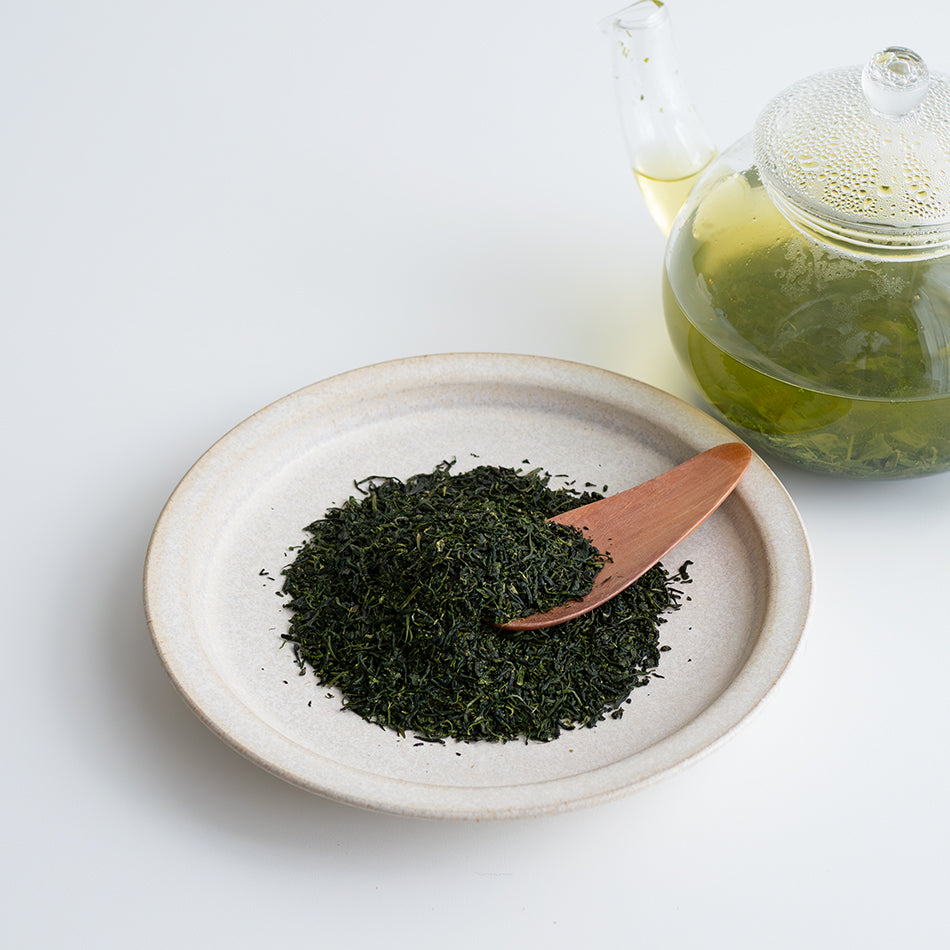
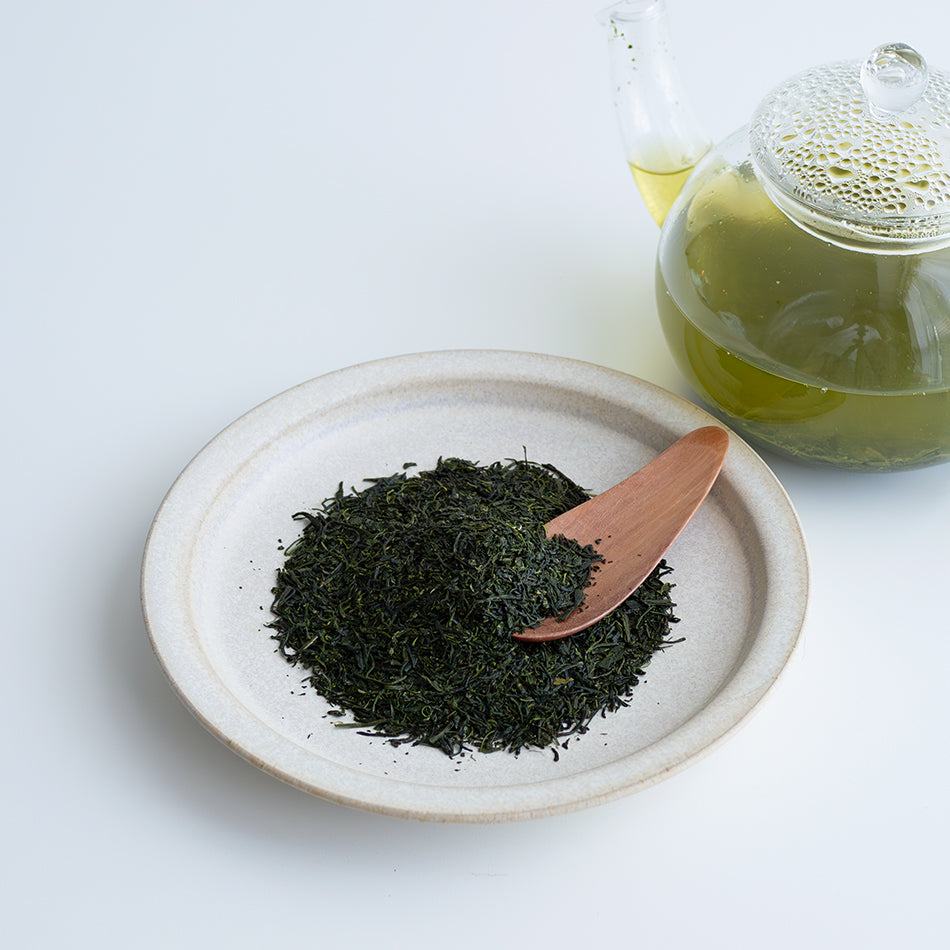
Ureshino Hojicha Loose Leaf — Japanese Roasted Green Tea

Regular price $35.80
( / )
Retail price. Pro trade pricing after login. Shipping calculated at checkout.

Please allow at least 1 week for order processing and shipping. This may vary depending on seasonality and stock situation. For full details, see our Shipping Policy.

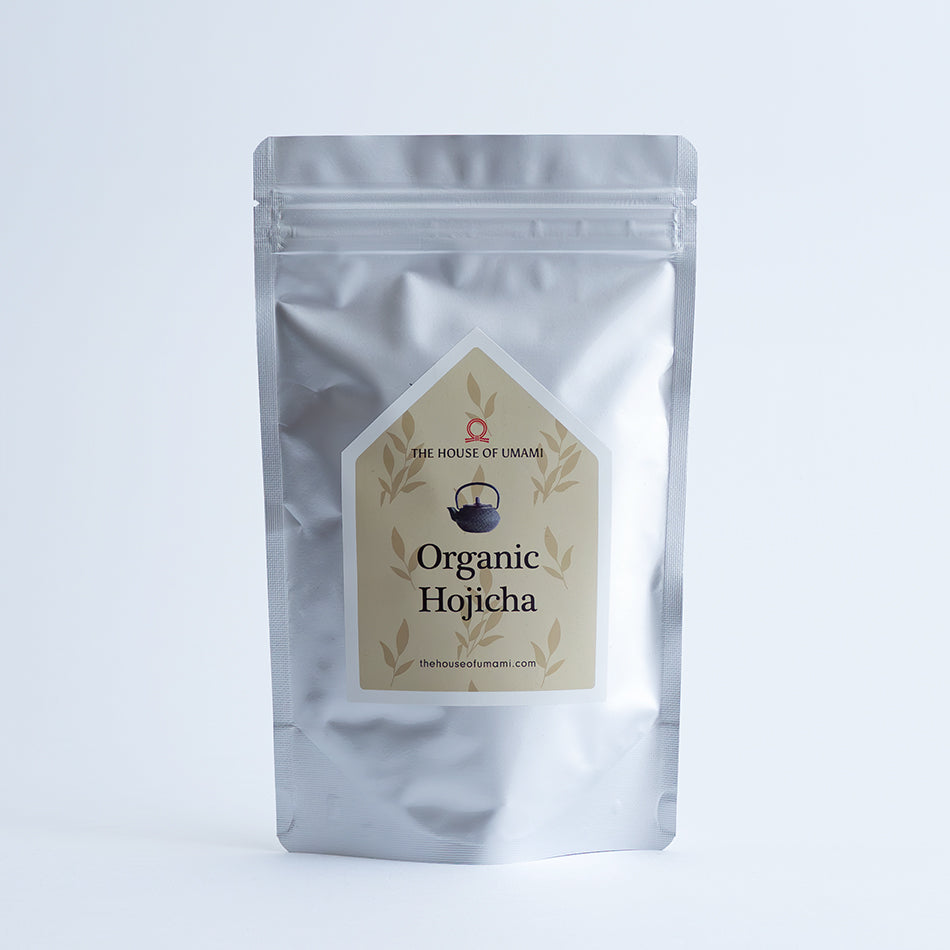
Hojicha roasted from tamaryokucha, not bancha, by a third-generation tea producer in Ureshino, Saga. Nutty, gently sweet, and clean on the finish.

Hojicha is green tea that has been roasted. How far that roast goes, and how it is matched to the leaf in front of you, is where the tea is made or lost. Tokunaga Seicha built its name on that step — reading the character of each lot and adjusting the roast accordingly. The producer has taken prizes at the Japanese Tea Awards in 2015, 2019 and 2022, and two- and one-star Great Taste Awards in the UK in 2017, 2018 and 2019.

The producer sits in Ureshino, in southwest Saga. Tea has been grown in this misty basin since around 1440, and Ureshino accounts for a small share of Japan’s green tea production. Almost all of what the region makes is tamaryokucha — curled rather than needle-shaped, and a rarity among Japanese green teas. Hojicha is usually roasted from bancha or from stems; this one is roasted from tamaryokucha, which gives it a rounder, sweeter character. The tea is made in small lots, in the producer's own facility next to the shop.

Masao Tokunaga started the business in 1947, selling tea by bicycle through Saga and Nagasaki with his wife. His grandson Kazuhisa runs it now. He worked as a systems engineer before coming back to the trade, and spent time in Ireland, where he saw how differently tea is drunk outside Japan. The House of Umami is the producer’s exclusive partner in the United States.

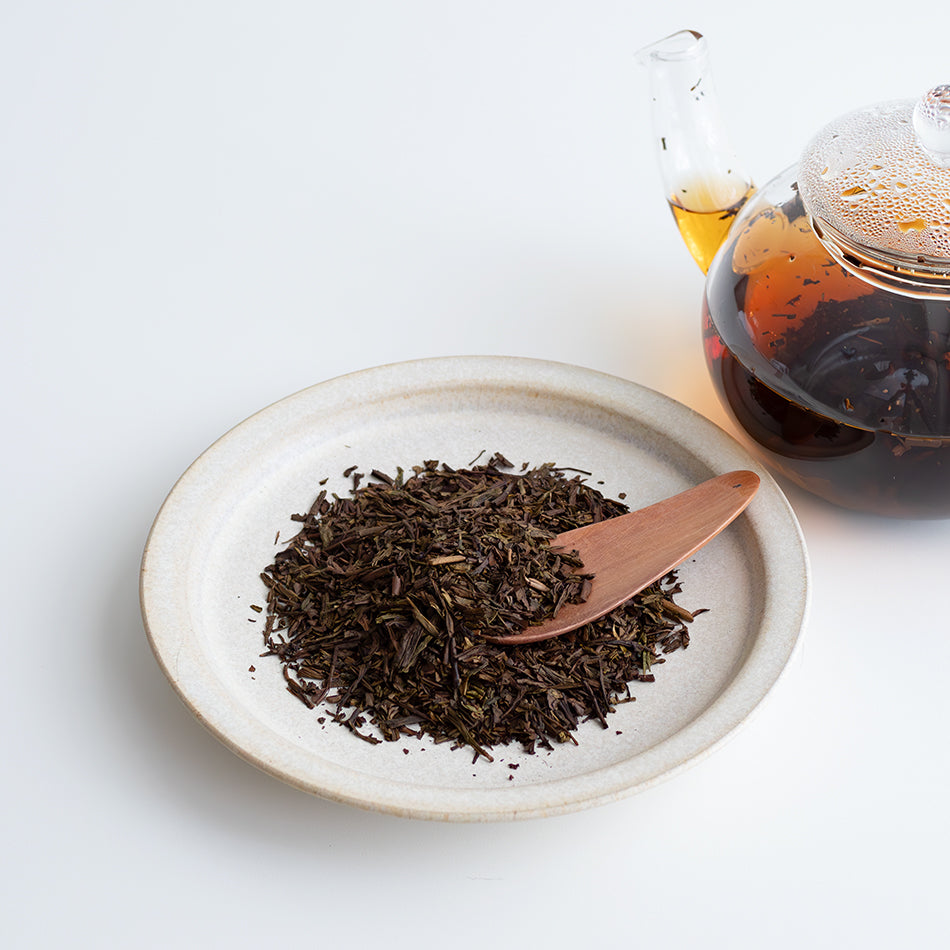
In the cup: toasted grain and caramel, a clean finish, almost no astringency. In Japan, hojicha is commonly enjoyed after meals and is also served to children. The leaf holds two to three infusions.


Green tea.
Contains none of the nine major food allergens identified by the FDA.

3.53 oz (100g) — Single bag
7.06 oz (200g) — Sets of 2
21.16 oz (600g) — Sets of 6, available to professional buyers
35.27 oz (1kg) — Made to order. Please contact us for pricing and lead time.

Each 100g bag makes approximately 16–20 300 ml pots using the recommended 5–6 g per brew.

For orders larger than 6 bags, please contact us.

#Brewing
・**Hot:** 5–6 g per 300 ml (10 fl oz) at 90–95 °C (195–205 °F). Steep 30–45 seconds for the first infusion, 45–60 for the second. Do not leave the leaf sitting in a warm pot between pours.
・**Cold brew:** 12–15 g per litre of cold water. Refrigerate 4 hours, then strain.

#Application by dish
・**Hojicha syrup — the working preparation:** steep the leaf hard, strain, then reduce with sugar to a concentrate. This is the format professional kitchens and bars keep on hand. It is a practical format to keep on hand for pastry and drinks alike. Leaf works better here: it produces a clean, strained infusion, while powder remains in the preparation.
・**Panna cotta:** infuse the leaf into the cream for a light tea note and keep the custard barely sweet. Serve the sweetened syrup alongside in a small pitcher for pouring. A crisp almond wafer gives the textural counterpoint.
・**Shochu highball:** build a house mixer of soda, grapefruit juice and hojicha syrup. It works across barley, rice, and sweet potato shochu, with room to adjust the balance to the spirit.
・**Chu-hai:** combine shochu, soda, and hojicha syrup for a roasted-tea variation.
・**Ice cream and gelato:** steep into the dairy base before churning. Steep harder than you would for drinking — cold mutes the roast.
・**Caramel and butterscotch:** infuse into the cream before it meets the sugar. Roasted tea and cooked sugar sit in the same register.
・**Poached pears:** build the poaching liquid on brewed hojicha rather than wine. Low-acid fruit takes the roast well; banana and fig do too.
・**Braised pork belly:** replace part of the stock with strong-brewed hojicha. The tannin cuts fat without the bitterness black tea brings.
・**Chameshi:** cook short-grain rice in brewed hojicha instead of water. Serve with grilled fish, or use it as the base for ochazuke.

Keep sealed in a cool, dark place, away from direct sunlight and strong odours. Tea takes on the smell of what sits next to it.

Once opened, close tightly after each use and finish within two months for best aroma.

**Shelf life:** 15 months unopened.

#Is hojicha caffeinated?
Yes. How much depends on the leaf it is roasted from and on how you brew it. We have not had this tea tested, so we do not publish a figure. In Japan, hojicha is customarily poured in the evening and served to children.

#How is this different from your Premium Hojicha Powder?
This is whole leaf, for steeping. The powder is milled for applications where you cannot infuse a liquid — doughs, batters, dry rubs. For anything that starts with a liquid, use the leaf.

#Can I re-steep the leaves?
Two to three times. The character changes from one infusion to the next, and the second infusion is often rounder and sweeter than the first.

#What is tamaryokucha?
It is the curled-leaf green tea Ureshino is known for. Most Japanese green tea is shaped into straight needles in the final step; tamaryokucha skips that step, so the leaf stays curved. It brews rounder and softer than sencha, and that character carries through the roast.

#Does it need to be refrigerated?
No. Refrigeration introduces moisture and odours. A sealed container in a dark cupboard is better.