Rinkosan Kurozu — Japanese Black Vinegar — Ready-to-Use

Regular price $11.20
( / )
Shipping calculated at checkout.

Please allow at least 1 week for order processing and shipping. This may vary depending on seasonality and stock situation. For full details, see our Shipping Policy.

A Japanese black vinegar brewed since 1876 in Gifu's mountains — mild where most are sharp, deep where all are flat. Pure brown rice. No additives. Cooks and drinks equally well.

Rinkosan Black Vinegar is made by Uchibori Vinegar, Inc., a brewery founded in 1876 in Yaotsu, a small mountain town on the Kiso River in Gifu Prefecture. In nearly 150 years of continuous operation, the foundational method has not changed: good vinegar starts with good sake.

Before fermentation begins, Uchibori first brews sake — coaxing full umami and sweetness from the rice through traditional multi-stage koji brewing before converting it to vinegar. That additional brewing step continues to the depth and complexity found in every bottle.

The name Rinkosan comes from the mountain and temple at the center of Yaotsu — Rinkozan Daizenji Temple — which has defined this brewery's identity since the beginning. The water comes from pristine underground springs along the Kiso River, carrying snowmelt from the mountains of the Chubu region. A second facility in Iijima, at the foot of the Central Alps, draws from alpine spring sources. Both provide exceptionally soft water, notoriously difficult for fermentation, but capable of producing a clean and mild vinegar when the technique is mastered.

Brown rice is the only ingredient — and Uchibori uses more of it than standard black vinegar specifications require. That extra rice creates the deep, lustrous dark amber color and the layered umami that carries through both cooking and drinking. No sweeteners. No colorants. No additives.

The acidity sits at 4.2% — low enough to keep the vinegar soft on the palate, high enough to preserve cleanly for two years without additives. Where most black vinegars lean sharp and assertive, Rinkosan leans mild: the rice sweetness and umami arrive first. The aroma is notably gentle — warm, inviting, and clean.

Rinkosan is positioned in Japan as a premium everyday pantry staple — the bottle you keep on the counter because you reach for it every day. It is equally at home in the kitchen or enjoyed as a drinking vinegar. To drink, dilute 1 part Rinkosan with 3 parts cold water. No sweeteners needed, though honey is a classic pairing.


Brown rice (Gifu Prefecture, Japan). No additives.

Brewed from brown rice only, using a proprietary multi-stage sake-first fermentation method developed over nearly 150 years. No artificial colorants, no sweeteners, no preservatives.

Allergens: None.

#Serving size: 1 tbsp (15ml)

Calories 16
Total Fat 0g
Sodium 3mg
Total Carbohydrate 4.1g
Protein 0.1g

*Values are supplied by the producer. Items not listed have not been independently tested.*

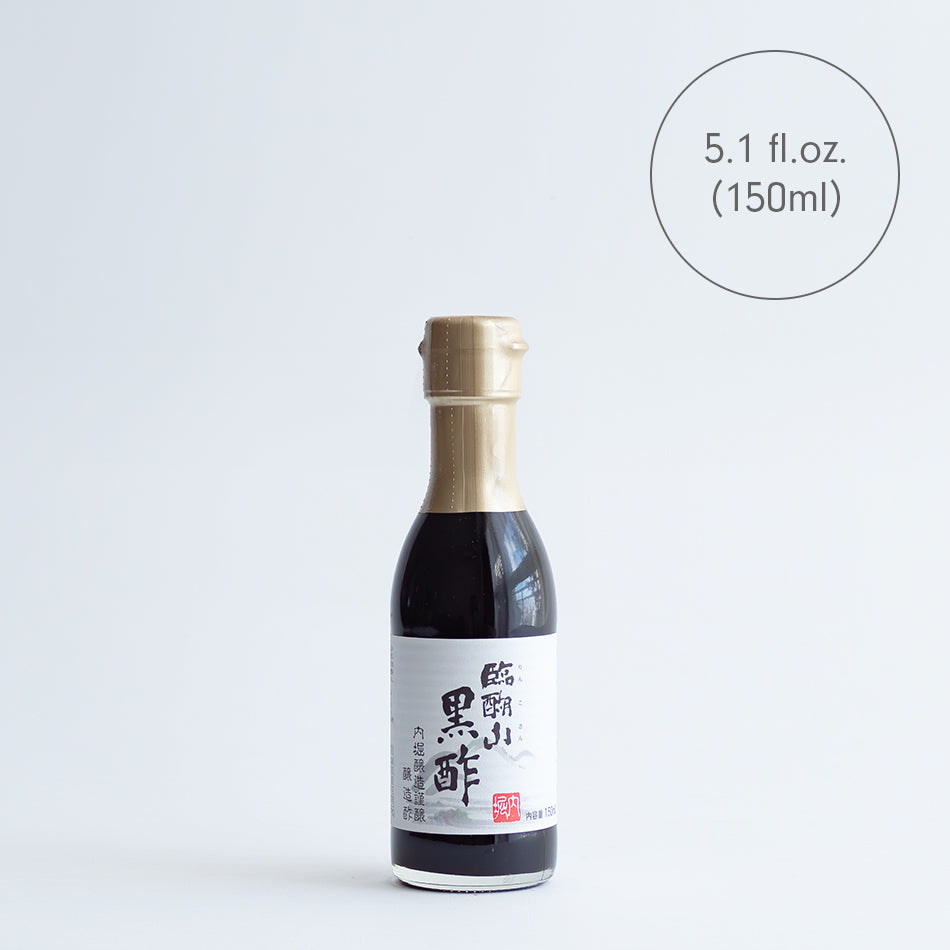
150ml / 5.07 fl oz — Entry size · Gifting
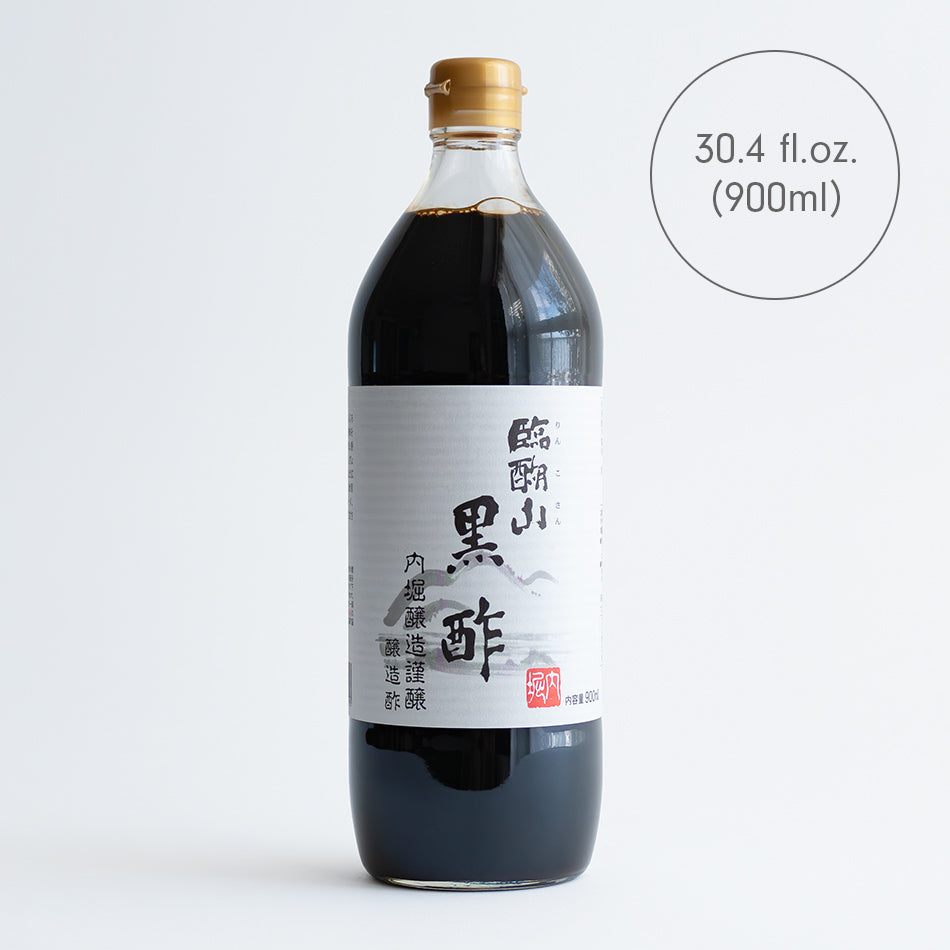
900ml / 30.4 fl oz — Kitchen staple · Regular use

Shake well before use.

Rinkosan's soft acidity and brown-rice umami make it more versatile than most vinegars at this acidity level. It goes where regular rice vinegar goes — and beyond.

#Pairing notes
Fatty proteins and rich sauces benefit most from the mellow acidity, which cuts without becoming overly sharp. Lighter preparations — shellfish, white fish, and raw seafood — absorb it cleanly without being overwhelmed. Grain and starch dishes hold the umami depth well. It also works as part of a braising liquid, integrating with reduced sauces without the sourness spike of regular vinegar.

#Application by dish
・**Dressings and vinaigrettes:** use as the acid component; the umami depth reduces the need for additional seasoning
・**Marinades:** particularly effective with chicken thighs, pork belly, duck — adds flavor while helping keep the meat tender
・**Braised dishes:** add to the braise liquid; the brown-rice sweetness integrates cleanly — classic with braised chicken wings or short ribs
・**Stir-fries:** splash in just before plating; heat releases the aroma
・**Dipping sauce for gyoza and dumplings:** use straight or mix with soy sauce and ginger
・**Sushi rice:** substitute for rice vinegar for deeper, more complex seasoned rice
・**Pan sauces:** deglaze after searing pork, duck, or chicken; mount with butter for a quick finishing sauce
・**Grilled and pan-seared fish:** a few drops off-heat, or stir into a beurre blanc in the final moments
・**Raw oysters and carpaccio:** a few drops in place of mignonette — bright acidity with gentle rice notes
・**Salads and cold plates:** whisk into dressing with sesame oil or olive oil

#Drinking
Dilute 1 part Rinkosan with 3 parts cold water. Add honey to taste. The rice sweetness and mild acidity make it pleasant without added sweeteners — it was designed to be drunk this way.

Shake well before use.

Store in a cool, dry place away from direct sunlight.
Refrigerate after opening. Consume as soon as possible once opened to preserve peak aroma.
Best before: 2 years from production date.
No additives — shelf life maintained naturally by the 4.2% acidity.

*Note: Sedimentation from natural ingredients and darkening of color may occur over time. This does not affect quality or safety.*

#Q1: What is kurozu, and how is it different from Chinese black vinegar?
Kurozu (黒酢, literally "black vinegar") is a Japanese vinegar made from brown rice and rice koji, fermented without added spices or coloring. It has a soft, rounded acidity with natural grain umami. Chinese black vinegar — most commonly Zhenjiang (Chinkiang) vinegar — is typically made from glutinous rice, wheat bran, and malt, often with aromatics added, producing a sharper, more complex flavor. Despite sharing the name "black vinegar" in English, the two are distinct categories with different culinary applications.

#Q2: Is Rinkosan Black Vinegar gluten-free?
Yes. The only ingredient is brown rice. No wheat, soy, sesame, or any of the nine FDA-recognized major allergens are present at any stage of production. Rinkosan Black Vinegar carries no allergen declaration.

#Q3: Can I substitute Rinkosan for rice vinegar at a 1:1 ratio?
Yes, though the result will differ. Rinkosan has lower acidity (4.2%) than most rice vinegars and brings natural brown-rice umami alongside its tartness. In dressings, marinades, and braises, it can substitute directly — expect added depth and a softer finish. The dark amber color may affect lighter-colored preparations; for those, start with a smaller amount and adjust.

#Q4: What does "sake-first brewing" mean?
Most vinegar is made by fermenting grain and water together in a single process. Uchibori Vinegar, Inc. first completes a full sake fermentation — drawing out the brown rice's umami and sweetness through koji enzymatic activity — before introducing acetic acid bacteria to convert the sake into vinegar. This additional step is why Rinkosan carries a noticeable umami character alongside its tartness: the complexity of the sake is preserved in the finished vinegar.

#Q5: The acidity is 4.2% — lower than most vinegars. Does this affect cooking performance?
Lower acidity means Rinkosan integrates more gently under heat. In braised dishes and pan reductions, the tartness stays in the background rather than sharpening as the liquid reduces. As a finishing vinegar, a few drops over a completed dish deliver brightness without an aggressive sour edge. For applications where a pronounced sharp acidity is needed — active pickling, for example — a higher-acidity vinegar will perform differently.