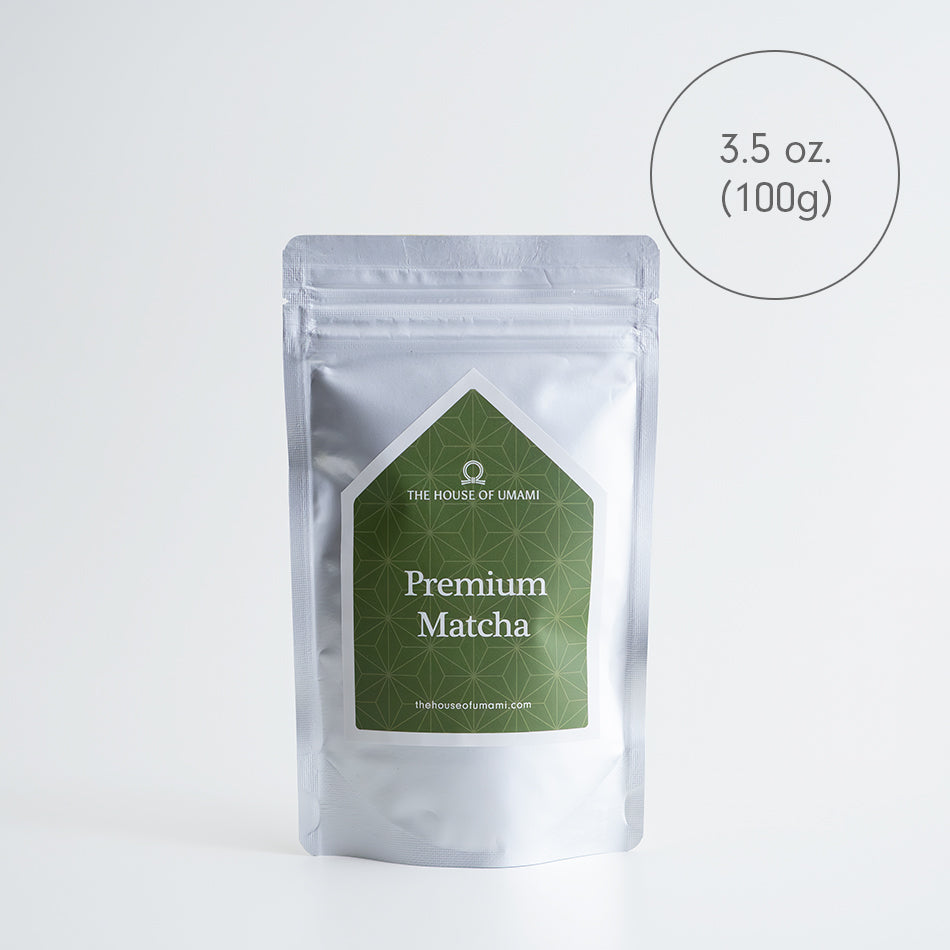
Stone-ground at 30–40 g per hour. From a third-generation tea producer in Ureshino, one of Japan's historic tea regions. Rich and full-bodied, with gentle sweetness and silky, persistent umami.
This matcha was developed specifically for The House of Umami.
Ayako, Umami Curator at The House of Umami, traveled to Ureshino, one of Japan's historic tea regions, to visit Tokunaga Seicha, a third-generation tea producer. She walked the tea fields before first harvest and saw how the shading works: leaves kept from direct sun to deepen color and umami. She tasted through the producer's lineup, identified what she was looking for, and commissioned this matcha for The House of Umami.
Good matcha begins in the field, but it is finished by judgment. How the tencha is rested, evaluated, and milled shapes the aroma, sweetness, umami, color, and texture in the cup. Kazuhisa Tokunaga is a third-generation tea maker behind award-winning teas, bringing the craft his family has built since 1947 to this matcha developed for The House of Umami.
The production follows a process that cannot be rushed. The tea is shaded for about 20 days before the first harvest. The raw leaves are Ichiban-cha — first harvest, picked when umami is at its peak. After processing into tencha, the leaves are aged for about six months or longer before milling. Tencha from the spring harvest rests through the summer; by the time it is milled in autumn it has aged about six months, and by the following spring, about a year. The aging rounds the flavor. Milling is done on a traditional stone mill at only 30 to 40 grams per hour — slow enough to keep the powder cool and the aroma intact.
The flavor is rich and full-bodied — gentle sweetness up front, followed by clean umami that lingers. The aroma suggests white chocolate and toasted nuts. Whisked, the liquid is a deep, vivid green. In pastry applications, the intensity holds through fat and sugar. At the bar, it carries through spirit and dilution. In a bowl, it stands on its own.