Koji Syrup — No Added Sugar Sweetener

Regular price $19.80
( / )
Retail price. Pro trade pricing after login. Shipping calculated at checkout.

Please allow at least 1 week for order processing and shipping. This may vary depending on seasonality and stock situation. For full details, see our Shipping Policy.

A fermented rice sweetener built from sake rice and koji — as sweet as honey, with a toasty, savory depth and no added sugar. Caramelizes when heated.

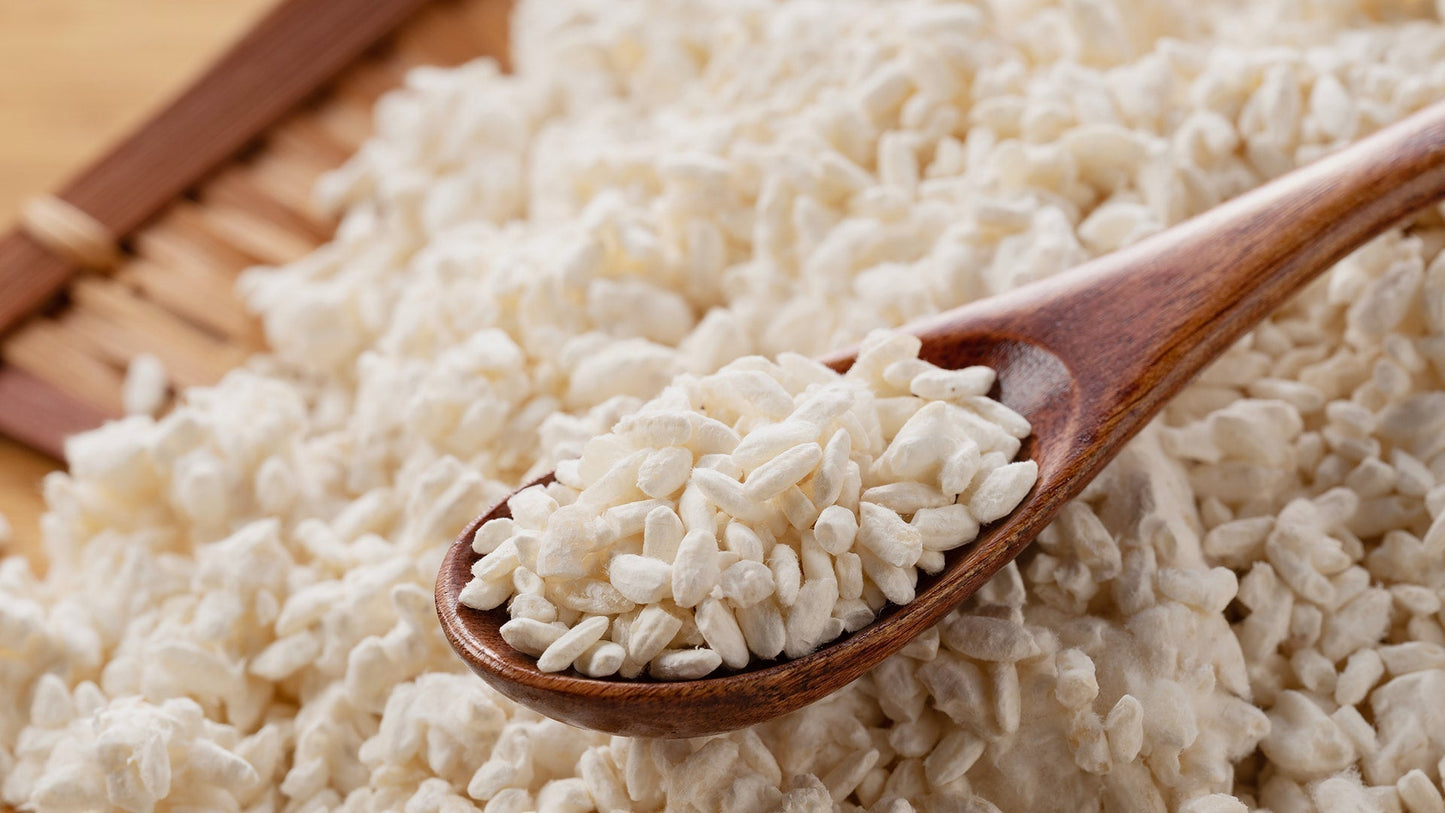
Koji Syrup is a fermented sweetener made from sake rice and koji. The koji enzymes break the rice starch down into a natural sweetness — no cane sugar, no added sugar, just rice and fermentation.

At around 75 Brix it reads as sweet as honey or maple, but the flavor runs in a different direction: toasty and mildly savory, closer to the soy-sugar glaze on grilled mochi than to a simple sweet syrup. That backbone comes from the amino acids the fermentation produces, which also contribute to its umami.

The rice is upcycled — sake rice that would otherwise go unused is fermented into the syrup, giving the product a sustainability story alongside its distinctive flavor.

Heat is where Koji Syrup separates from an ordinary sweetener. Warmed in a pan, on fruit, or under a broiler, the aroma blooms and the sugars take on a caramelized, nutty character. It works wherever sweetness should carry a savory edge: custards, roasted and grilled fruit, glazes for meat and fish, and ice cream bases.

Made from rice koji alone. No added sugar, no additives. Not a low-calorie food.

Rice koji (rice, koji).
Made in Japan.
No added sugar. No additives. Gluten-free.
Not a low-calorie food.

8.5 oz / 240g — for home and gifting
- Single bottle · 2-bottle set

56.4 oz / 1600g — for high-volume and professional use
- Available to professional buyers.

Approx. 75 Brix. A little goes a long way — start with less than you would use of granulated sugar.

For orders larger than the 1600g size, please contact us.

Use Koji Syrup anywhere you want sweetness with a savory edge. It pours like honey and caramelizes under heat, so it works both as a finishing drizzle and as a built-in sweetener in a recipe. Sweetness is concentrated — start with less than the sugar a recipe calls for and adjust.

#Application by dish
・**Custards and crème caramel:** sweeten the base directly; the toasty notes read as a built-in caramel without the need to caramelize sugar separately.
・**Roasted and grilled fruit:** brush over figs, peaches, or pineapple before they hit the heat — the syrup caramelizes and deepens as the fruit cooks.
・**Ice cream and gelato base:** use in place of part of the sugar for a savory-sweet base with rounder body.
・**Glaze for pork, duck, and chicken:** brush on in the last minutes of roasting or grilling for color and a lacquered, mildly savory finish.
・**Glaze for fish:** thin with a little soy sauce or citrus and paint over salmon or black cod before broiling.
・**Pan sauces:** add a spoonful off-heat to round out acidity and give a glossy finish without refined sugar.
・**Yogurt, granola, and toast:** drizzle straight from the bottle as you would honey or maple.
・**Coffee and tea:** stir in as a sweetener; the malty depth suits dark roasts and roasted teas like hojicha.
・**Dressings and marinades:** whisk into vinaigrettes or marinades where you want sweetness plus umami in one ingredient.
・**Baking:** use as a partial sugar replacement in cakes and cookies; reduce other liquids slightly to account for the syrup.

*Timing note: for the most caramelized aroma, add Koji Syrup toward the end of cooking or brush it on before a final hit of direct heat.*

Store in a cool, dark place away from direct sunlight.
Do not refrigerate — refrigeration can cause crystallization. Keep the cap sealed between uses.
If crystals form, warm the bottle gently in hot water to redissolve them; this does not affect quality.

Best before: 12 months from production date.