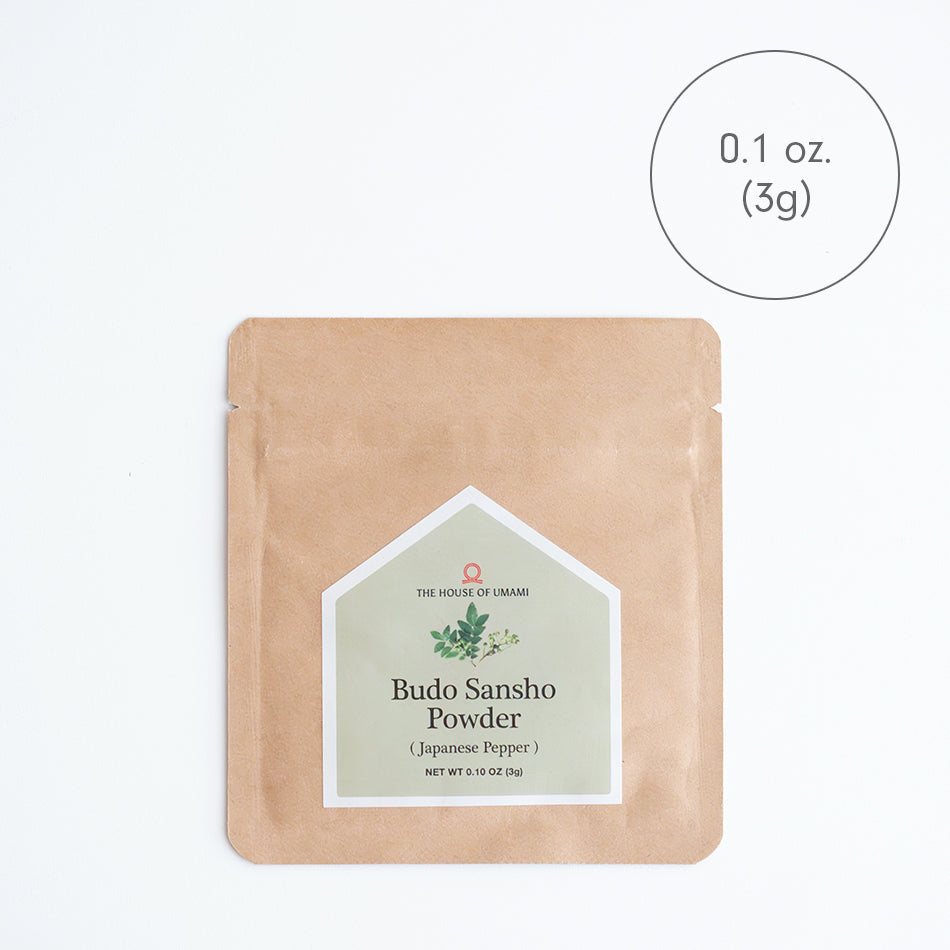
Single-origin Japanese Pepper, stone-milled by the farmer. Vivid green. Electric citrus. A pinch finishes the dish.
Budo sansho is Japan's most distinctive sansho variety — grown in dense, abundant clusters of large, thick-skinned berries that produce a pericarp richer and more intensely aromatic than any other variety in the country. A member of the citrus family (Rutaceae), its character is defined by a bright yuzu-like aroma, volatile citrus lift, and a gentle tingling — known as sanshool — that spreads lightly and fades cleanly, leaving the palate open. It amplifies without overwhelming, which is why chefs reach for it as a finishing spice across Japanese and French cuisines alike. Unlike Sichuan pepper, which delivers prolonged numbness built for bold, oily preparations, sansho completes a dish rather than driving it.
Wakayama Prefecture produces the majority of Japan's sansho. The Shimizu area of Aridagawa Town alone accounts for roughly 60% of the national harvest. At the heart of this region is the Toi district — where budo sansho was first discovered in the late Edo period — and where The House of Umami's partner farm sits at an elevation of 600 meters. Here, trees are tended on steep mountain slopes inaccessible to machinery, with all weeding done by hand and no herbicides used.
After the midsummer harvest, the sansho berries are dried until the pods naturally split open. Each berry is then meticulously separated from stems and seeds by hand, and stone-milled slowly — one deliberate pass at a time. Speed would strip away the delicate citrusy oils; the stone mill protects them. The result is a striking, vivid green powder with a bright, electrifying aroma.
The color reveals the difference immediately. Commercial sansho powder is frequently blended with cheaper varieties to reduce cost — the result often trends toward a dull brown color. Ours is 100% budo sansho from a single partner farm, with nothing added.
Four things set this apart from every other sansho powder on the US market:
-
Single farm. Not a blend from multiple growers — every batch from one farm, one terroir, one harvest.
-
100% budo sansho. No blending with cheaper varieties. The color is proof.
-
Stone-milled by the farmer, never in a factory. Each lot slowly ground to preserve the delicate, volatile oils responsible for the aroma and sanshool tingling.
-
Direct oversight. The House of Umami visits the farm in person to evaluate quality before anything is purchased.
The farm's fresh flower sansho is shipped directly to a Michelin three-star kaiseki restaurant in Kyoto and a two-star French restaurant in Tokyo each season. French chefs and chocolatiers have embraced budo sansho for the way it bridges citrus, spice, and sweetness in a way very few European ingredients can match.