Premium Matcha — Single-Origin Ureshino

Regular price $47.30
( / )
Retail price. Pro trade pricing after login. Shipping calculated at checkout.

Please allow at least 1 week for order processing and shipping. This may vary depending on seasonality and stock situation. For full details, see our Shipping Policy.

Stone-ground at 30–40 g per hour. From a third-generation tea producer in Ureshino, one of Japan's historic tea regions. Rich and full-bodied, with gentle sweetness and silky, persistent umami.

This matcha was developed specifically for The House of Umami.

Ayako, Umami Curator at The House of Umami, traveled to Ureshino, one of Japan's historic tea regions, to visit Tokunaga Seicha, a third-generation tea producer. She walked the tea fields before first harvest and saw how the shading works: leaves kept from direct sun to deepen color and umami. She tasted through the producer's lineup, identified what she was looking for, and commissioned this matcha for The House of Umami.

Good matcha begins in the field, but it is finished by judgment. How the tencha is rested, evaluated, and milled shapes the aroma, sweetness, umami, color, and texture in the cup. Kazuhisa Tokunaga is a third-generation tea maker behind award-winning teas, bringing the craft his family has built since 1947 to this matcha developed for The House of Umami.

The production follows a process that cannot be rushed. The tea is shaded for about 20 days before the first harvest. The raw leaves are Ichiban-cha — first harvest, picked when umami is at its peak. After processing into tencha, the leaves are aged for about six months or longer before milling. Tencha from the spring harvest rests through the summer; by the time it is milled in autumn it has aged about six months, and by the following spring, about a year. The aging rounds the flavor. Milling is done on a traditional stone mill at only 30 to 40 grams per hour — slow enough to keep the powder cool and the aroma intact.

The flavor is rich and full-bodied — gentle sweetness up front, followed by clean umami that lingers. The aroma suggests white chocolate and toasted nuts. Whisked, the liquid is a deep, vivid green. In pastry applications, the intensity holds through fat and sugar. At the bar, it carries through spirit and dilution. In a bowl, it stands on its own.


Matcha (tencha). Single-origin Ureshino tea, Japan — no blending with other regions. No additives.

Because matcha is an ultrafine powder, it may compact during transit. Sift before use if clumping occurs.

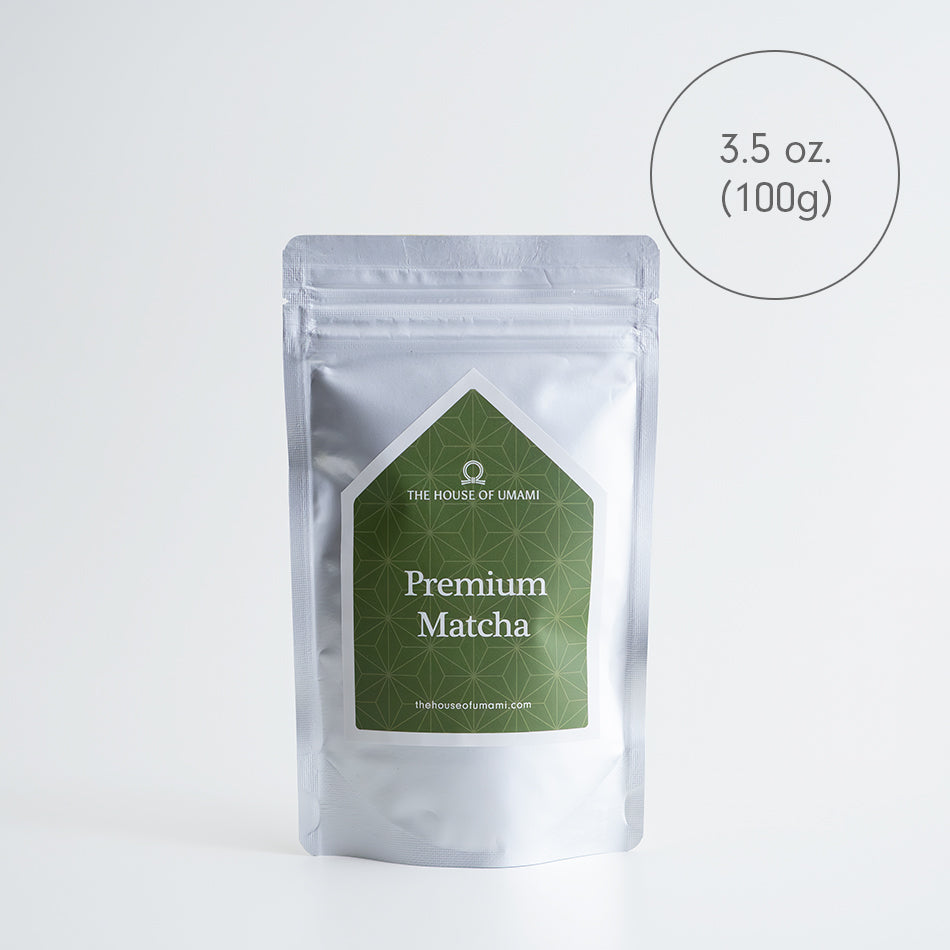
100 g / 3.5 oz — Bag · Single · Set of 2
500 g / 17.63 oz — Bag · Single · Set of 6

The 500g format is available to professional buyers. Both sizes contain the same matcha; only the bag size differs.
For orders larger than 6 bags, please contact us.

Sift before use. Ultrafine powder compacts in the bag — a fine-mesh sieve helps reduce clumping and promotes smoother whisking.

Traditional preparation: 2 g matcha, 70 mL water at 80°C / 176°F. Whisk briskly with a chasen until smooth and frothy. Serve immediately. For a milder bowl, use 1 g matcha to 100 mL water at the same temperature.

The flavor holds through fat, sugar, and dilution. It performs equally in the pastry kitchen, the savory kitchen, and behind the bar.
#Pairing notes
White chocolate, dairy, and citrus open the umami depth. Black sesame, kinako, miso caramel, and pistachio build contrast. In savory applications, dashi, aged cheese, and brown butter amplify the umami register without competing.

#Applications
・**Usucha (traditional matcha):** 2g per 70ml water at 80°C / 176°F, whisked with a chasen until smooth and frothy. Aerate fully; the vivid green foam is part of the presentation.
・**Matcha latte:** whisk the matcha into a little water until smooth, then top with steamed milk. Works hot or iced. Color and aroma hold in both.
・**Namelaka and pastry cream:** fold in at room temperature to avoid heat degradation. Sift first and adjust the amount to taste.
・**Ganache and bonbons:** whisk the sifted matcha into warm cream before combining with chocolate. Fat carries the aroma; umami depth balances dark chocolate's bitterness.
・**Gelato and soft serve:** add to the cold mix before churning. The vivid green holds in the finished product. Pairs well with white sesame, red bean, and yuzu.
・**Matcha beurre blanc:** whisk a small amount into the sauce off-heat at the very end. Works with white fish (halibut, turbot, sole) and scallops — umami amplifies the natural sweetness of the shellfish.
・**Pasta and noodle dough:** knead into the dough with the flour. Pairs with light cream, brown butter, bottarga, or dashi-based sauces.
・**Bar program — matcha cocktails:** whisk into citrus-forward or umami-forward builds. Pairs well with Japanese gin, sweet potato shochu, koji-fermented mixers, and egg white for texture. Works as a non-alcoholic component in koji-based and fermented soft drinks.

Sift before use. Reseal the bag tightly after each use.

Refrigeration is recommended, even before opening, to keep the matcha fresh. Keep away from direct sunlight, heat, and humidity.

After opening, seal tightly and refrigerate — this keeps out moisture and odors from other foods. Bring to room temperature before opening to prevent condensation.

**Best before:** 8 months from production date. Consume as soon as possible once opened to preserve peak aroma and color.

#How is this matcha different from other matcha?
It is single-origin: all of the leaf comes from the Ureshino tea area, with no blending from other regions and no additives. It is made from first-harvest leaves shaded for about 20 days, aged as tencha for about six months or longer, and stone-milled at 30–40 g per hour. It was developed exclusively for The House of Umami in the US.

#Is this ceremonial-grade or culinary-grade matcha?
We don't use those labels. Japan's Green Tea Labeling Standard defines what matcha is, but it does not define “ceremonial” or “culinary” grades. This is first-harvest matcha made to be whisked and drunk as usucha, while its color and flavor also hold in pastry, gelato, and cocktails.

#What does a tea maker do in matcha production?
A tea maker turns harvested leaf into finished tea. For matcha, that means judging the tencha, deciding how long and under what conditions it rests, and setting the milling speed. Leaves from similar fields can taste very different depending on these decisions. At Tokunaga Seicha, a family tea producer in Ureshino founded in 1947, this work is led by the third generation, Kazuhisa Tokunaga.

#Why is this matcha aged before milling?
After the first harvest, the leaves are processed into tencha and rested for about six months or longer before milling. Spring tencha rests through the summer; by autumn it has aged about six months, and by the following spring, about a year. This resting period rounds the flavor before the tencha is slowly stone-milled at 30–40 g per hour.

#What is matcha?
Matcha is green tea made from tencha: leaves shaded for about two to three weeks before harvest, steamed, and dried without rolling, then ground to a fine powder, traditionally on a stone mill. This is how Japan's Green Tea Labeling Standard defines matcha. Because the powder is whisked into water or blended into food rather than steeped and strained, the whole leaf is consumed. Green tea powder made by grinding sencha is a different product.

#Where is Ureshino?
Ureshino is a city in the southwest of Saga Prefecture, on the island of Kyushu in southern Japan, bordering Nagasaki Prefecture. Tea has been grown there since around 1440, when potters who had come from Ming China began cultivating it. The Ureshino tea area covers parts of both Saga and Nagasaki. The region is known for tamaryokucha, a curled green tea, and for its hot springs.